|
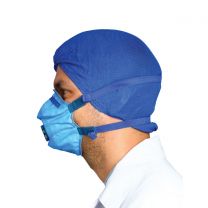
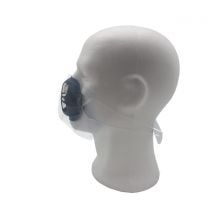
Half Mask Respirators. Substances in the atmosphere, dusts, fumes, vapours and gases and
also micro-organisms encountered
in the work place can cause
damage to your health, in some
cases even death.
This damage can occur by breathing in these substances.
Health and Safety Legislation requires employers to control
exposure to these substances to
protect their employees.
The first aim should always be to control the substance, so it is
not in the atmosphere. However,
this is not always possible and
suitable personal protection
must be provided.
This may include protective clothing and respirators.
Care is needed to choose the correct type of RPE (Respiratory
Protective Equipment).
The RPE must be capable of providing a sufficient quantity of clean
air for the wearer to breathe,
the equipment must fit the
wearer and the wearer must use
it properly in accordance with
the manufacturer instructions.
Please note that here is always a risk of leakage or contaminated
air into RPE, no RPE can offer
100% protection.
Equipment such as face masks with filters and powered respirators,
which take in contaminated air
from the work room and
filter/clean it before it is
inhaled are all called
Simple Filtering respirators.
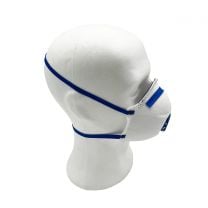
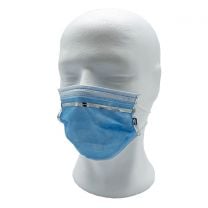
Some respirators are designed to be disposable but can offer a
great deal of protection. These
respirators are called
Disposable Filtering Face
Pieces.
The following types of filter may be available:
1. For dusts and other particulate materials only
2. For certain gases and vapours only
3. Combination types for particulates and some gases and vapours
IMPORTANT NOTICE
Fit Testing Of Respirators -
Training required
RPE Fit Testing is required for all tight-fitting face pieces
including all filtering face
pieces (disposable face masks),
half masks and full-face masks.
This includes negative pressure
full-face masks as well as
power-assisted full masks, and
both self-contained and air-fed
breathing apparatus.
Information Document HSE 282/28, recommends that RPE Fit Testing
should only be conducted by a
trained competent person.
The
COSHH
(Control of Substances Hazardous
to Health) Regulations include a
requirement that the initial
selection process for all
tight-fitting face pieces should
include face-fit testing to
ensure the wearer has a
correctly fitting device.
Face-Fit Testing
is also required under the
Control of Asbestos at Work
Regulations and the Control of
Lead at Work Regulations.
To be competent, the fit test operator should have adequate
knowledge and have received
adequate instruction and
training in the following areas:
·
Regulations and Guidance
·
The Purpose and Applicability of
Fit Testing
·
Procedures for Selection of
Adequate and
Suitable RPE
·
Fit Factors and Protection
Factors
·
Examination Procedures for RPE,
Identification of
Maintenance Problems
·
Correct Donning Procedures and
Pre-Use Fit
Checks
·
Qualitative and Quantitative
Face-Fit
Testing
·
Sampling from the Face piece
·
Diagnostic Checks on Equipment
·
Correct Fit Testing Procedures,
Purpose of
the Fit Testing Exercises
·
Problem Solving
·
Capabilities and Limitations of
the Fit
Testing Equipment
·
Interpretation of Results
We are happy to advise our customers about how to find an
accredited Respirator Face Fit
Training course/or competent
person to give you the skills
and knowledge to meet the
requirements of HSE282/28 for
Competency of Fit Testing
Operators.
E-Components & Chains Ltd has 2 qualified fit testers who will be
happy to assist you.
|